导演:Radványi Géza
主演:Artúr Somlay Miklós Gábor Zsuzsa Bánki
状态:HD中字
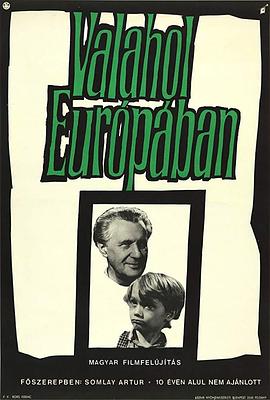
剧情: Somewhere in the remote region, the war ends. In the midst of ruined cities and houses in the streets, in rural hamlets, everywhere where people still live, are children who have lost their homes and parents. Abandoned, hungry, and in rags, defenseless and humiliated, they wander through the world. Hunger drives them. Little streams of orphans merge into a river which rushes forward and submerges everything in its path. The children do not know any feeling; they know only the world of their enemies. They fight, steal, struggle for a mouthful of food, and violence is merely a means to get it. A gang led by Cahoun finds a refuge in an abandoned castle and encounters an old composer who has voluntarily retired into solitude from a world of hatred, treason, and crime. How can they find a common ground, how can they become mutual friends? The castle becomes their hiding place but possibly it will also be their first home which they may organize and must defend. But even for this, the price will be very high. To this simple story, the journalist, writer, poet, scriptwriter, movie director, and film theoretician Béla Balázs applied many years of experience. He and the director Géza Radványi created a work which opened a new postwar chapter in Hungarian film. Surprisingly, this film has not lost any of its impact over the years, especially on a profound philosophical level. That is to say, it is not merely a movie about war; it is not important in what location and in what period of time it takes place. It is a story outside of time about the joyless fate of children who pay dearly for the cruel war games of adults. At the time it was premiered, the movie was enthusiastically received by the critics. The main roles were taken by streetwise boys of a children's group who created their roles improvisationally in close contact with a few professional actors, and in the children's acting their own fresh experience of war's turmoil appears to be reflected. At the same time, their performance fits admirably into the mosaic of a very complex movie language. Balázs's influence revealed itself, above all, in the introductory sequences: an air raid on an amusement park, seen in a montage of dramatic situations evoking the last spasms of war, where, undoubtedly, we discern the influence of classical Soviet cinematography. Shooting, the boy's escape, the locomotive's wheels, the shadows of soldiers with submachine guns, the sound of a whistle—the images are linked together in abrupt sequences in which varying shots and expressive sharp sounds are emphasized. A perfectly planned screenplay avoided all elements of sentimentality, time-worn stereotypes of wronged children, romanticism and cheap simplification. The authors succeeded in bridging the perilous dramatic abyss of the metamorphosis of a children's community. Their telling of the story (the scene of pillaging, the assault on the castle, etc) independently introduced some neorealist elements which, at that time, were being propagated in Italy by De Sica, Rossellini, and other film artists. The rebukes of contemporary critics, who called attention to "formalism for its own sake" have been forgotten. The masterly art of cameraman Barnabás Hegyi gives vitality to the poetic images. His angle shots of the children, his composition of scenes in the castle interior, are a living document of the times, and underline the atmosphere and the characters of the protagonists. The success of the picture was also enhanced by the musical art of composer Dénes Buday who, in tense situations, inserted the theme of the Marseilaise into the movie's structure, as a motive of community unification, as an expression of friendship and the possibility of understanding. Valahol Europaban is the first significant postwar Hungarian film. It originated in a relaxed atmosphere, replete with joy and euphoria, and it includes these elements in order to demonstrate the strength of humanism, tolerance, and friendship. It represents a general condemnation of war anywhere in the world, in any form.

 1.0更新至06集Niwirin Limkangwalmongkol Baipor Thitiya 讲述霉运缠身的职场新人 用功德值在幸运点 兑换三个愿望,谁知不仅愿望全部落空,还被派来个干啥啥不行的垫底天使 ,于是两人开始了同居生活。
 8.0更新至第01集关智一 武内骏辅 松冈祯丞 小林千晃 户谷菊之介 白石晴香 长谷川育美 冈本信彦 小林裕介 市道真央 佐久间大介 鸟海浩辅 日笠阳子 堀江由衣 杉田智和 小西克幸 速水奖 今井文也 榎木淳弥 爱美 石川由依 上田燿司 中村栞奈 冈田雄树 一応中学的学生一堂零、冷越豪、出瀬潔、大间仁、物星大等五人,因在中学留级等原因,各自都拥有丰富个性且行为古怪的性格,被周围人视为名物团体“奇面组”而备受关注。转校生河川唯与同学宇留千绘一同目睹了“
 4.0更新至第01集户谷菊之介 清水大登 仲村宗悟 小笠原仁 土岐隼一 上村祐翔 小林千晃 和泉风花 木村太飞 堂岛飒人 小松昌平 千叶翔也 利物飞德两大名校分别有着这样两个超人气校草男团,然而在一个身份成谜的女孩转学过来之后,可怕的事件接连不断... 吸血鬼少年与狼少年都认定是对方所为,随时警戒着彼此。但与此同时,却又不断陷入转学生
 8.0更新至第01集田村睦心 饭冢麻结 畠中祐 千本木彩花 石川英郎 大原沙耶香 小市真琴 杉田智和 千叶翔也 三宅麻理惠 「招待您进入永无止境的游戏?」 废游戏宅.山田健一偶然发现了一款没有标题的谜之网络游戏。 在设定难易度时,他毫不犹豫地选择了最高难度。 没想到当他按下『地狱模式』之后,竟然转生成了异世界的农